
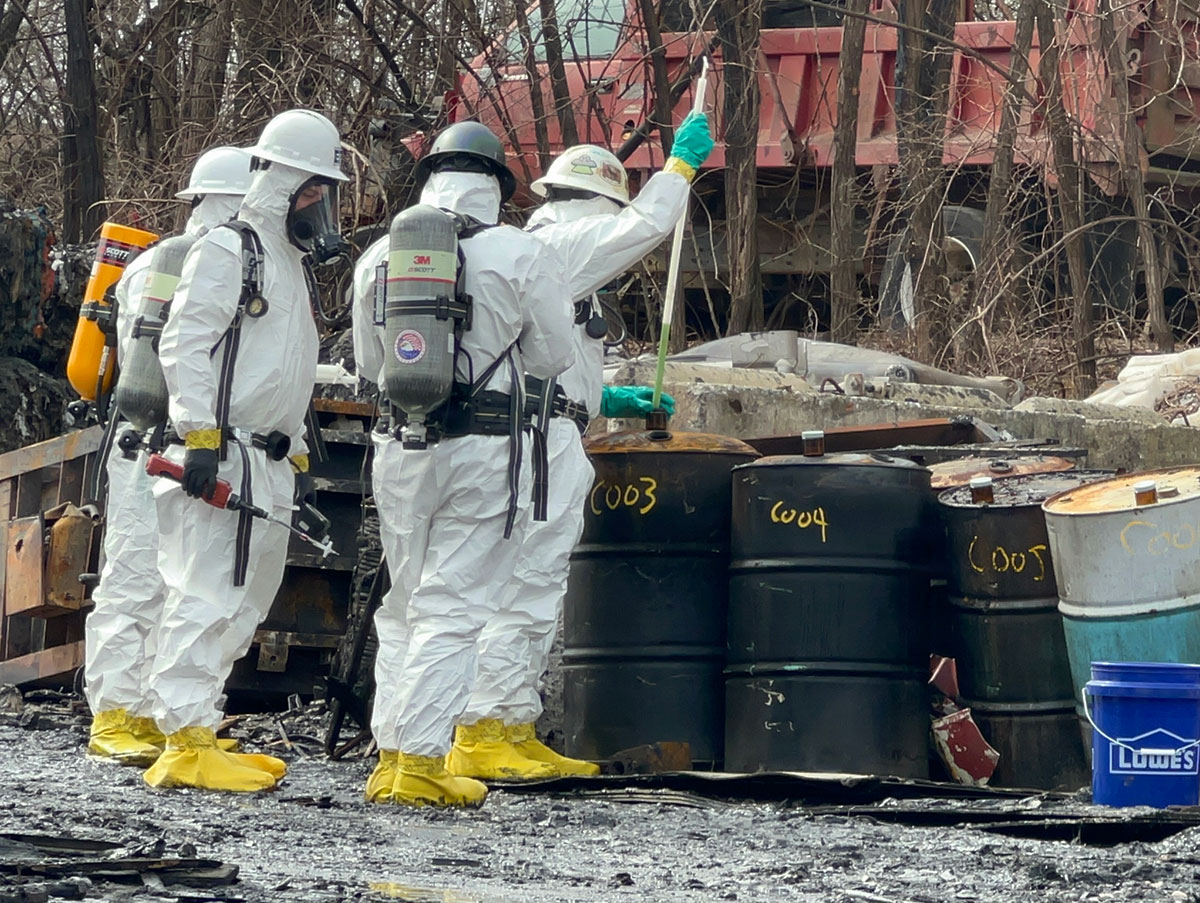
When a hazmat team decontaminates casualties after a chemical release, when a bomb squad responds to a suspected device, or when a city’s hospitals and first responders prepare for a mass-casualty event, much of the equipment, training, and planning behind that response was likely paid for by a federal preparedness grant. Detection instruments, protective suits, decontamination gear, communications systems, and large-scale exercises are the kinds of things these grants buy, and they are often the difference between a prepared community and one improvising in a crisis. The Government Accountability Office (GAO) says the process that decides who gets that money is not as clear to applicants as it should be.
The findings come from a snapshot report released November 12, 2026, that pulls together GAO’s earlier reviews of the Federal Emergency Management Agency (FEMA), part of the Department of Homeland Security. FEMA runs 13 preparedness grant programs totaling $2.9 billion for fiscal year 2026. The funds help state and local governments, ports, transit systems, and other non-federal organizations prevent, prepare for, and respond to terrorism and disasters. Some of it also supports planning for large events, including the 2026 FIFA World Cup and the 2028 Summer Olympics. The report is a synthesis of prior audits, not a new investigation.
Unclear Scoring and Shifting Priorities
GAO’s first concern is how applications are evaluated. In a 2023 review of transit security grants, auditors found that FEMA’s 2021 funding notice described its assessment criteria but did not accurately explain how key factors, such as risk reduction, would be scored. FEMA also did not consistently fund the highest-scoring applications as the notice said it would. A 2025 review of port security grants found the announcement left out some evaluation criteria and never explained how the criteria were weighted into an overall score. GAO concluded that applicants may have lacked the information needed to choose projects likely to score well, and that the fairness of the process was at risk.
A second issue is communication. When DHS introduced National Priority Areas in 2020, which are themes applicants must address, FEMA did not tell stakeholders before putting them into effect, according to a 2024 GAO review. The agency’s outreach, including bulletins, emails, and listening sessions, did not draw out recipients’ concerns about implementing the change. GAO also found DHS had not fully documented why it altered the priorities over several years, and grantees said the lack of information made planning harder.
Risk Models That Applicants Can’t Check
The third problem is the risk modeling used to decide eligibility and funding for some programs. GAO reported in 2018 and 2023 that FEMA’s models for two homeland security grants and for transit security grants did not fully follow recognized scientific practices. The models often lacked documentation explaining underlying assumptions, such as the weight given to each component or the reasons for year-to-year changes. The transit model also omitted cyber threats, even though DHS had identified them as relevant to transit security by fiscal year 2019. GAO said better adherence to accepted practices would make funding approaches more credible.
Disrupted Funding Under the Trump-Vance Administration
The report places these findings against a turbulent 2025. DHS terminated some grants and paused funding, which delayed payments to recipients. A federal district court ordered FEMA in April 2025 to stop delaying disbursements while litigation continues. DHS also attached new conditions to awards, including requirements to cooperate with federal immigration enforcement. A court barred enforcement of the 2025 conditions, but DHS attached similar ones to 2026 awards, and lawsuits remain ongoing as of this month.
Unclear processes and interrupted funding cycles make it harder for FEMA to send limited dollars where they reduce the most risk while keeping every community above a baseline level of capability. That balance, the agency says, depends on information moving in both directions: FEMA needs reliable data to allocate well, and recipients need to understand how decisions are made.
GAO says FEMA can improve by acting on its open recommendations. These call for fully describing assessment criteria, making sure evaluation processes match the agency’s goals for distributing funds, capturing relevant threats in risk models for certain grants, and applying lessons from past problems before taking future grant actions.
Sources and further reading:
U.S. Government Accountability Office. Preparedness Grants: Improved Transparency and Communication Needed. GAO-27-109434, 12 November 2026.
This article was researched and sourced by CBRNE Central editors and reported with Claude AI assistance for drafting and editing.