


A federal aircraft built to identify toxic chemicals from the air has responded to just seven emergencies since early 2021. Incidents it sat out range from an ammonia leak at an Oklahoma hotel that injured 74 people to a recycling plant explosion in Toledo, Ohio, that killed two workers.
The plane is a single-engine Cessna that the Environmental Protection Agency (EPA) flies under its Airborne Spectral Photometric Environmental Collection Technology (ASPECT) program. It is designed to screen wide areas for chemical plumes, radiation and oil within hours of a request. Its decline was detailed in Nov. 16 reporting from nonprofit newsroom Floodlight, published by The Guardian. Three people who helped build and run the program told Floodlight the EPA has lost the expertise that made the program effective.
The EPA says ASPECT is prepared for chemical warfare agent attacks, radiological dispersal devices (dirty bombs) and improvised nuclear devices. Its automatic screening library covers 78 chemicals, including five chemical warfare agents, two of them nerve agents, according to the EPA’s inspector general. Based near Dallas, the plane can be airborne within an hour and collecting data anywhere in the continental United States within nine hours, the agency says.
Chemical results now take about a week
In a June 23, 2026 alert, the EPA Office of Inspector General (OIG) found that the plane’s chemical sensing no longer works as designed. When the system is working properly, its software turns sensor readings into results for responders in about five minutes. Because the aging sensors now interfere with that automated step, analysts must process the data by hand, which generally takes about a week for each flight. The OIG also found the EPA had not directly told all of its on-scene coordinators, the federal officials who request the plane, about the delay. The program manager told the OIG that thermal imaging and radiation detection still function as designed.
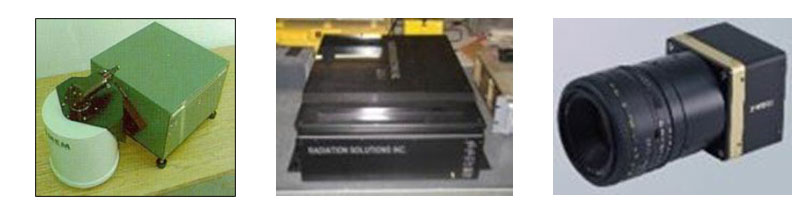
The EPA agreed with both OIG recommendations. It is replacing the plane’s infrared spectrometer and line scanner with commercial hyperspectral imaging sensors and off-the-shelf analysis software, with integration targeted for June 2027. The program manager told the OIG that buying the new sensors took four years.
Former program leaders dispute the fix
Mark Thomas, who managed the program for 18 years, longtime ASPECT scientist Robert Kroutil and former program manager Rick Turville told Floodlight the existing sensors still work. In their view, the larger problem is lost know-how. They trace it to a 2019 reorganization under the Trump-Pence administration in which staff were told to move to Texas or face termination, and several, including Thomas, left. Former managers said they once tracked emergencies and pressed coordinators to call in the plane. The EPA now waits for requests. “I fear that the public is at risk,” Kroutil said.
According to procurement documents cited by Floodlight, the EPA awarded the $1.7 million sensor contract to Canadian company Telops without competitive bidding. Telops’ parent company, Exosens, said the systems use different technologies and that its sensors can identify hundreds of chemicals with further analysis, while imaging helps separate plumes from their surroundings. Chris Manning, an independent spectrometer expert, told Floodlight the new sensors could supplement the old ones but would be a weak substitute, calling them slower, less sensitive and less suited to moving targets.
An EPA web page published in Oct. 2026 that lists cost savings under the Trump administration credits the agency with saving $134,000, or 7%, on a chemical-sensing system for the ASPECT program. The page does not identify the system or explain how the savings were achieved.
Questions over past deployments
After an Aug. 22, 2025, explosion and fire at Smitty’s Supply in Roseland, Louisiana, the EPA flew ASPECT for its first emergency deployment in 19 months. It then reported that ozone and three other pollutants were far below levels linked to health effects. Kroutil later spent four weeks working through the raw flight data by hand. He found high concentrations of toluene, trichloroethylene and naphthalene, with toluene at levels he concluded could have endangered nearby communities.
At the 2023 train derailment in East Palestine, Ohio, nobody requested the plane for more than two days, and it missed the controlled burn of vinyl chloride railcars. An earlier OIG investigation found the EPA had poorly documented its procedures and had not adequately briefed responders on the aircraft’s capabilities. The OIG has since opened a new audit and evaluation of the agency’s East Palestine response, prompted by hotline complaints and an Aug. 28, 2026, request from Vice President JD Vance and EPA Administrator Lee Zeldin. One objective is whether the EPA had enough data to support its public statements on air quality. The OIG notification does not mention ASPECT.
The EPA did not answer Floodlight’s questions about the program. The OIG alert covers the sensors and how the agency communicated their limits, but not the staffing and deployment concerns raised by former program leaders. Until the new sensors are in place, the aircraft is likely to remain unavailable for chemical emergencies, Floodlight reported.
Sources and further reading:
Flying blind: inside the decline of the EPA’s chemical-detection plane – The Guardian
The EPA’s Chemical-Detecting Plan Isn’t Doing Its Job Anymore – Wired
Management Alert: Evaluation of the ASPECT Aircraft’s Chemical-Sensing Capability – U.S. EPA
Airborne Spectral Photometric Environmental Collection Technology (ASPECT) – U.S. EPA
This article was researched and sourced by CBRNE Central editors and reported with Claude AI assistance for drafting and editing.