

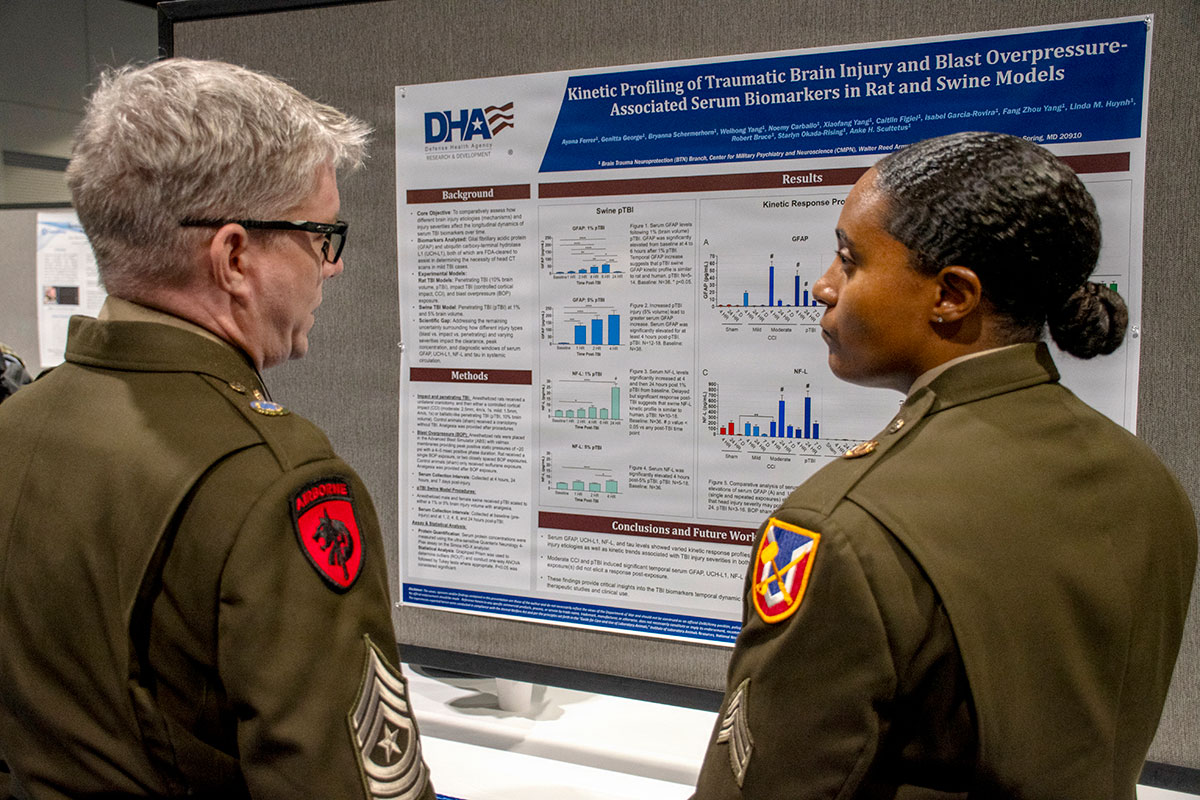
A wide range of CBRN-relevant medical research surfaced at the 2026 Military Health System Research Symposium, held August 3-6 in Florida, spanning nuclear battlefield casualty care, chemical warfare agent countermeasures, and equipment aimed at closing supply chain vulnerabilities in protective gear. Among the more than 3,000 attendees drawn from military, academic, industry, and international partner organizations, several research teams presented work addressing threat categories that have moved from theoretical planning scenarios to near-term research priorities.
A session titled “Ops in a Nuclear Environment: Ensuring Medical Readiness and Preparing for Complex Injuries,” moderated by COL Lien Senchak, brought together six presentations on radiological and nuclear medicine. Its centerpiece came from ORAU and the Radiation Emergency Assistance Center/Training Site (REAC/TS). Presenters described a medical readiness program that grew out of an interagency effort, the Burn Blast Injury Working Group, formed in response to the war in Eastern Europe. That group modeled what happens to a health care system after a nuclear detonation or major power plant incident and found that medical supplies, inpatient beds, and treatment queues would be overwhelmed quickly, delaying care for radiation casualties at the exact moment early intervention matters most.
To address that gap, the working group adapted Tactical Combat Casualty Care, the battlefield model credited with driving down combat mortality over the past quarter century by stabilizing injuries at the point of wounding, specifically for radiation exposure. The result is a self and buddy care kit that allows a casualty to manage radiation injury for up to a week before reaching an established health care system. More than 7,500 of these kits have already been fielded to Ukraine, and researchers described early work to integrate the concept into garrison and embassy health settings abroad.
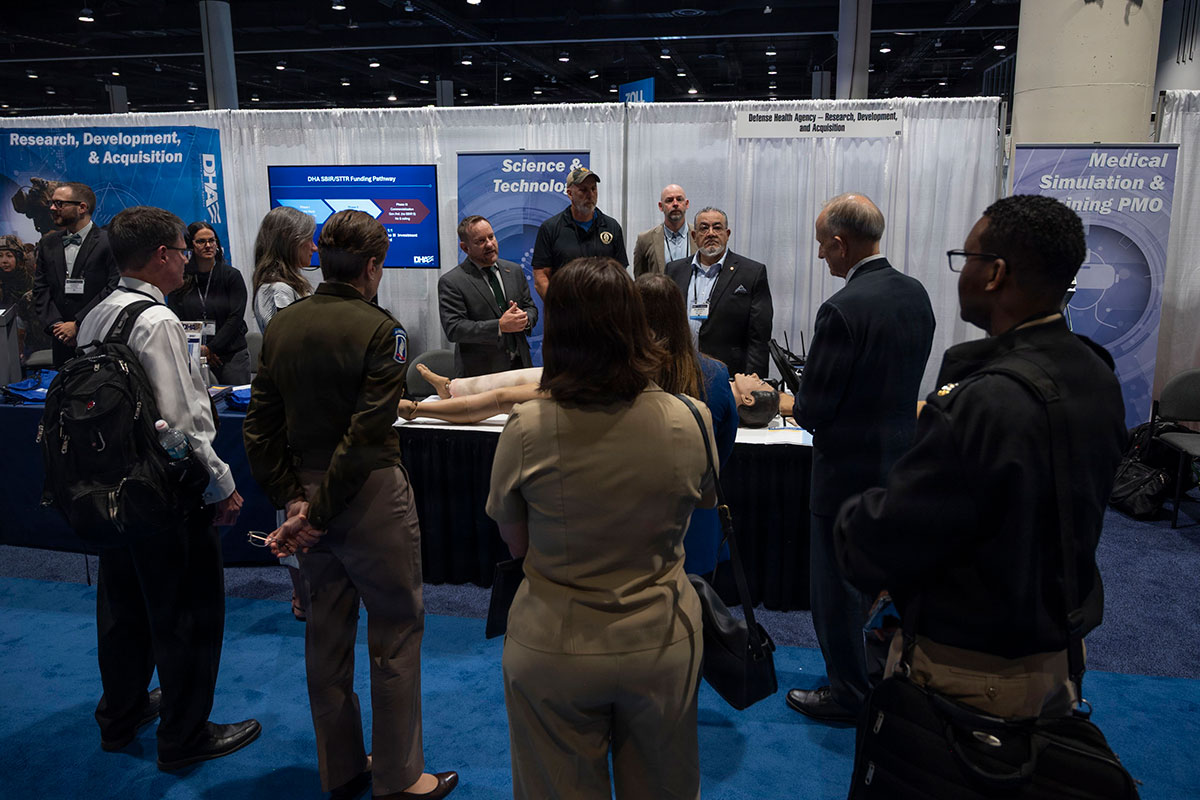
Radiation Countermeasures and Faster Triage Tools Advance Toward Deployment
The same session featured two presentations on pre-exposure prophylactic drugs intended to protect personnel before radiation exposure occurs rather than treat injury afterward. Humanetics Corporation presented data supporting BIO 300, an orally available countermeasure being developed under the FDA’s Animal Rule, the regulatory pathway used when human efficacy trials are not ethical or feasible. The drug already holds Fast Track and Orphan Drug designation, and researchers reported that dosing under fed conditions nearly doubled systemic drug exposure compared to a fasted state, a detail with direct bearing on how the drug would be issued operationally. Researchers from the Uniformed Services University presented complementary data on gamma-tocotrienol, a shelf-stable, self-administered radiation countermeasure that improved hematopoietic recovery in nonhuman primates when given a single dose 24 hours before radiation exposure.
Diagnosing the extent of radiation injury remains a harder problem, since cutaneous radiation damage can take days to weeks to become visible even as tissue destruction proceeds underneath. Researchers from the University of California Irvine, in a poster presentation, described a portable imaging device combining two optical techniques to detect subsurface tissue changes and metabolic shifts in irradiated skin. In a swine model developed at the Armed Forces Radiobiology Research Institute, the device picked up measurable physiological changes seven to twenty days before injury became visible to the eye, a lead time that could reshape how radiation casualties are triaged. A separate presentation from the Army Institute of Surgical Research described a flow cytometry method for detecting platelet dysfunction after radiation and combined trauma within roughly an hour, with dysfunction scores rising in proportion to injury severity, offering a potential bedside tool for guiding resuscitation decisions.
Chemical Exposure Diagnostics and Protective Equipment Also Advance
Beyond the radiation focused sessions, presentations addressed chemical exposure treatment and personal protective equipment challenges specific to CBRN environments. Researchers from the University of Pennsylvania presented an integrated diagnostic and therapeutic approach for organophosphate exposure, targeting the mitochondrial dysfunction that underlies much of the neurologic and organ damage seen in nerve agent poisoning but is not addressed by current cholinergic focused treatments. Using cyclosporine A, an existing drug with a known safety profile, the team demonstrated preserved mitochondrial function and improved survival in an animal model of organophosphate exposure, paired with a blood based biomarker intended to support field triage.
On the protective equipment side, LifeProtect presented data on a reusable, antimicrobial treated N95 equivalent respirator designed to reduce dependency on single use PPE supply chains, a vulnerability the company’s researchers describe as a growing operational risk in contested logistics environments. Laboratory testing found the respirator maintained filtration performance through 28 days of reuse while achieving up to 99.99 percent reduction of select bacteria on contact.
Underpinning much of this work is an institutional effort to move promising prototypes out of the laboratory faster. The Defense Threat Reduction Agency’s Joint Science and Technology Office described its Laboratory Analysis and Clinical Evaluation program, which independently validates diagnostic prototypes for chemical and biological threats and has transitioned four diagnostic capabilities into operational use over the past three years, with field testing conducted during exercises such as Salaknib 26.
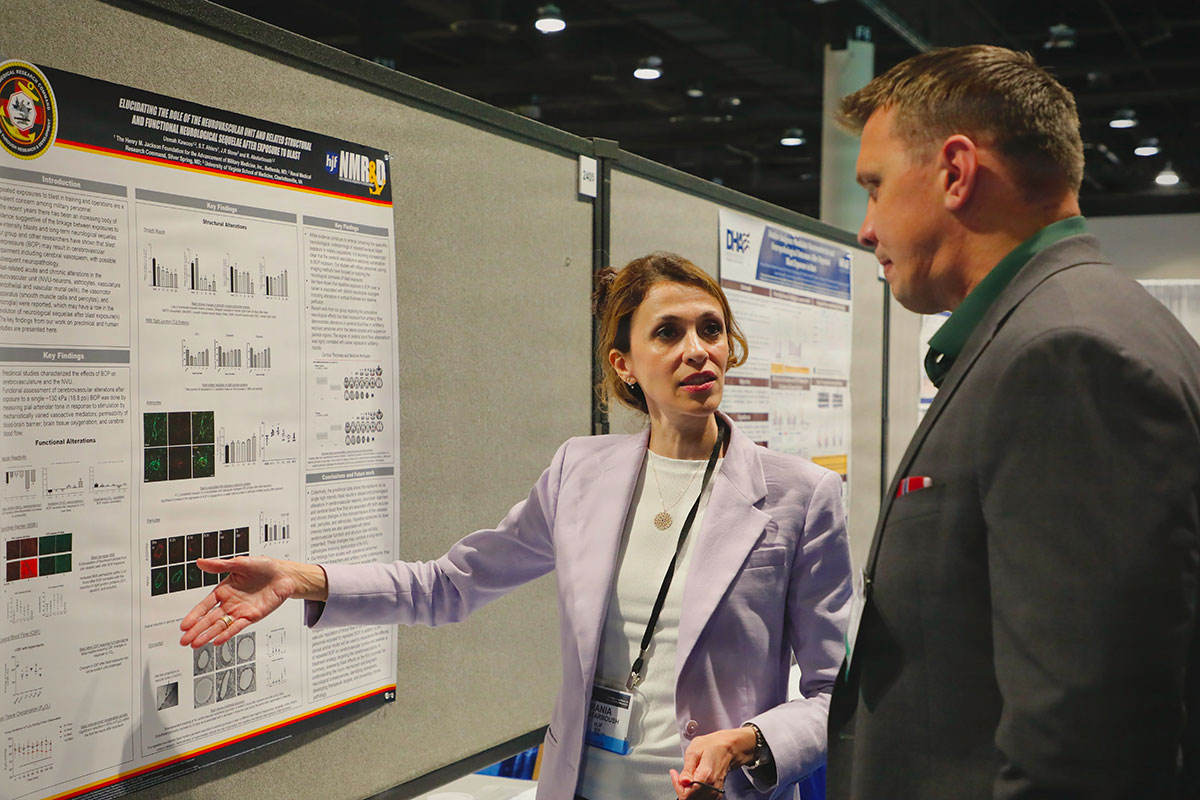
Countermeasures Target Nerve Agents and Legacy Chemical Warfare Agents
Elsewhere at the symposium, researchers presented countermeasures against chemical agents that have reappeared on modern battlefields. Two posters from the Army Medical Research Institute of Chemical Defense (USAMRICD) examined isoflurane, an anesthetic already fielded in military medical units, as an add-on treatment for seizures caused by chemical warfare nerve agents when combined with traumatic brain injury. Standard nerve agent treatments lose effectiveness the longer they are delayed, a serious concern given that future conflicts against capable adversaries are expected to push casualty evacuation timelines out considerably. Both an injectable and an inhaled formulation of isoflurane reduced seizure activity and brain cell loss in mouse models, even when administered well past the point where standard treatments typically fail.
Other chemical threat work addressed agents with historical and renewed relevance. A Bundeswehr-led study tested a next-generation antioxidant compound against sulfur mustard, the World War I-era blister agent still classified as a chemical warfare threat, finding it significantly reduced DNA damage in exposed skin cells. Michigan State University researchers, meanwhile, tested a silk-derived protein therapy against chloropicrin, a choking agent with a history of battlefield use and recent reported use in the Russia-Ukraine war, and found it reversed corneal injury in laboratory eye models, an important finding given that no approved treatment currently exists for chloropicrin-induced eye damage.
Supporting all of this work is a push toward better field detection. Air Force Research Laboratory researchers described paper-based biosensors, freeze-dried and rehydrated at the point of need, that can detect arsenic, cadmium, and mercury in water sources within 30 to 60 minutes, addressing a real logistics constraint as expeditionary units are increasingly expected to draw water locally rather than carry it. And a Canadian firm, MED-ENG, presented a laboratory method using compact shocktubes to validate wearable blast dosimeters without high explosives, along with a modeling framework aimed at eventually linking measured blast overpressure exposure to predicted injury severity, a capability that does not yet exist in fielded systems but that could inform both training safety limits and individual exposure thresholds.
Sources and further reading:
2026 Military Health System Research Symposium – Department of Defense, August 2026.
Military Health Researchers Report Advances in Biosurveillance and Drug Resistant Infections at 2026 Symposium – Global Biodefense
This article was researched and sourced by CBRNE Central editors and reported with Claude AI assistance for drafting and editing.