

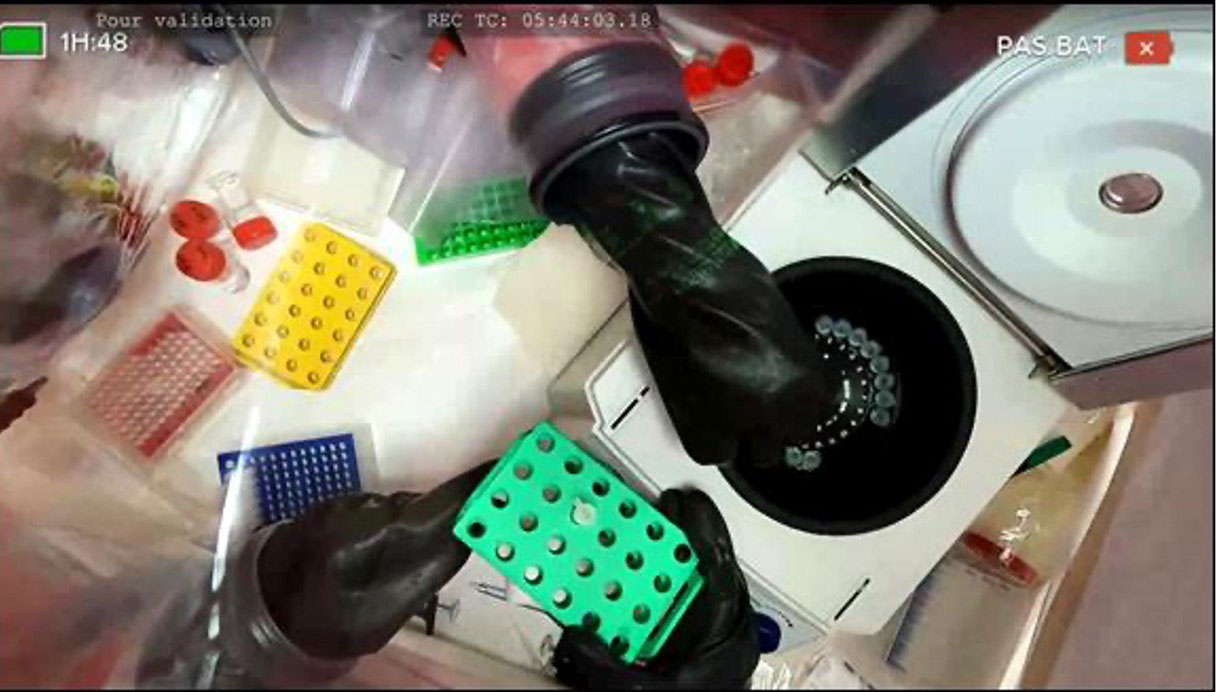
Investigating a crime scene is difficult enough. Investigating one that is also radioactive adds an entirely different layer of complexity, one that French authorities have spent the past several years working to solve, according to a case study recently detailed by the International Technical Working Group on Nuclear Forensics (ITWG).
The account, published in ITWG’s March 2026 newsletter, describes a multi-year collaboration in France between the Commissariat for Atomic Energy and Alternative Energies (CEA), the National Police, and the National Gendarmerie. The effort grew out of a practical gap. CEA’s radiation protection teams are skilled at detecting and safely removing radioactive sources from a crime scene, but historically had little experience preserving conventional evidence such as fingerprints and DNA. French forensic units had the opposite problem: deep expertise in traditional evidence collection but limited experience working around radioactive contamination. A crime scene involving nuclear or radioactive material demands both skill sets at once, and until recently, no French team had both.
To close that gap, the two communities began coordinating ahead of ITWG’s Collaborative Materials Exercise (CMX), a scenario-based nuclear forensics drill in which national laboratories receive characterized radioactive samples along with case details and are asked to run a full investigative analysis, simulating a real discovery of material outside regulatory control. French teams refined their joint procedures across three consecutive exercises, CMX-6, CMX-7, and CMX-8.
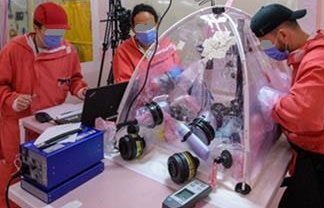
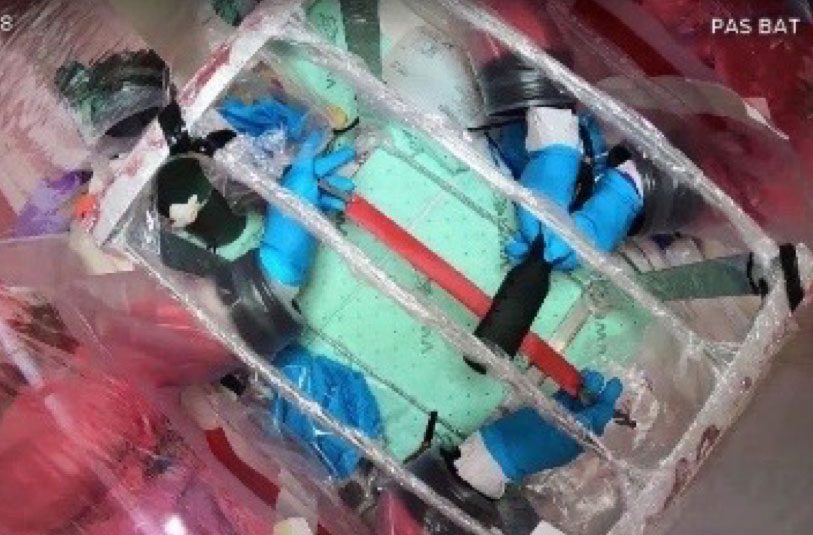
Much of the described work centered on a deceptively basic tool: the glove bag, a sealed, transparent enclosure that let investigators handle contaminated evidence without spreading radioactive material or exposing themselves to it. Nearly every standard forensic technique had to be reengineered to function inside one. Cyanoacrylate fuming, used to raise latent fingerprints on non-porous surfaces such as bottles or USB drives, worked well inside the bags for small evidence batches. Fingerprint detection on porous materials like paper or tape typically relies on a chemical reagent applied by dipping evidence in liquid, but that method was ruled out because it risked generating more liquid radioactive waste than investigators were authorized to produce. Teams adapted by spraying the reagent instead, then air-drying and heat-treating the evidence inside the same sealed bag.
Even lighting posed a challenge. Investigators needed a specialized light source to reveal latent prints, but placing the light unit itself inside a bag meant it would eventually become contaminated waste. The team’s solution was to keep the light source outside the containment system entirely, feeding a flexible fiber-optic cable through a sealed sleeve so the bag’s integrity was never compromised.
DNA analysis proved to be the toughest hurdle of all. Investigators found that the standard laboratory process of breaking open cells and purifying DNA also happened to strip away radioactive contamination quite effectively, achieving decontamination levels above 90 percent in one exercise. That finding mattered because the next step, running samples through a genetic sequencer to generate a usable profile, involved a piece of equipment far too large, expensive, and sensitive to risk placing inside a glove bag. Instead, teams set up a separate, carefully monitored workstation for the sequencer within the site’s controlled-access zone, using radiation checks, dosimetry monitoring, and disposable protective materials to keep it safe from contamination. The approach worked. In one exercise, investigators successfully linked a genetic profile recovered from a bottle to a specific individual in the case scenario.
Despite operating with fewer instruments and more constraints than a conventional forensic laboratory, the French teams were ultimately able to process fingerprints, indented handwriting, torn documents, digital media, and DNA evidence under conditions closely resembling an actual radioactive crime scene.
The positive results from these exercises have already prompted follow-on work exploring how decontaminated DNA evidence might eventually be transferred from nuclear sites to standard crime labs once contamination drops below regulatory limits.
Sources and further reading:
ITWG Nuclear Forensics Update, Issue 38 — International Technical Working Group for Nuclear Forensics
This article was researched and sourced by CBRNE Central editors and reported with Claude AI assistance for drafting and editing.